
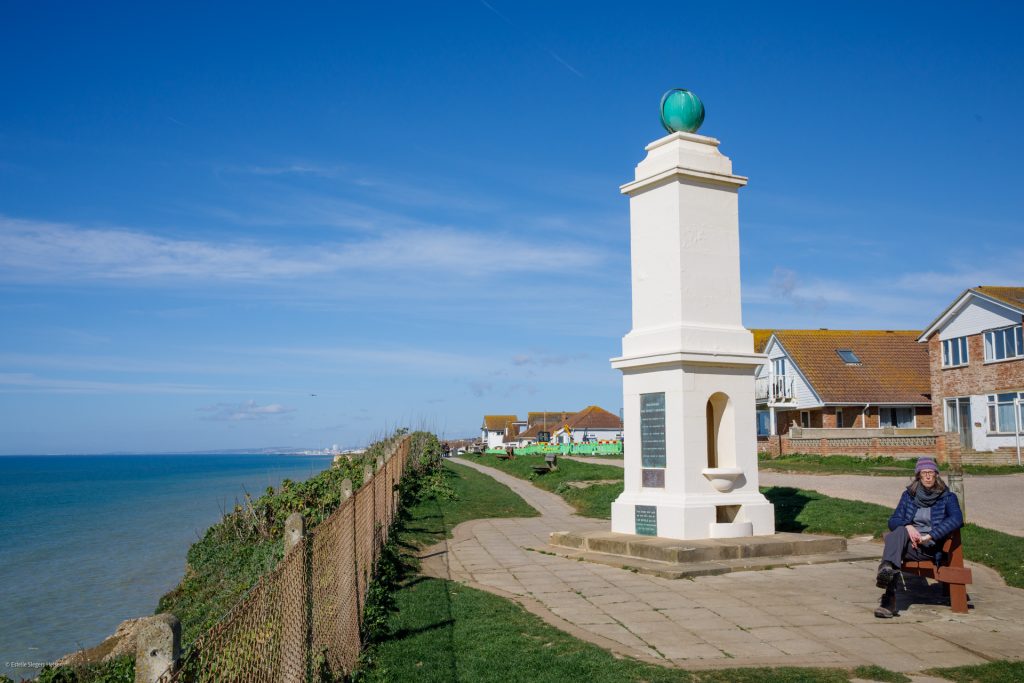
In mid-April 2025, I visited Eastbourne, an English coastal town in East Sussex. While preparing for my trip, I discovered the Meridian Monument in Peacehaven, located approximately 30 minutes west of Eastbourne. Intrigued, I decided to visit the monument on a windy yet sunny late morning during my stay. I parked in a lot at the edge of the chalk cliffs, where I was treated to a view southwest over the English Channel. The Meridian Monument was within walking distance, set against a backdrop of homes along sandy streets.
I came up with a small photography project focused on the locations where the Greenwich Meridian intersects with land and sea in Britain. Peacehaven marks the point where the Meridian reaches land from the south. I took some snapshots of the monument, followed by a series of more detailed photographs of both the monument and the surrounding views.
In early June, I visited Cleethorpes in Lincolnshire, where the Greenwich Meridian Marker stands about a mile south of the coastal town. To complete my series, I need to see two more locations in the East Riding of Yorkshire.
Thomas Joshua Cooper
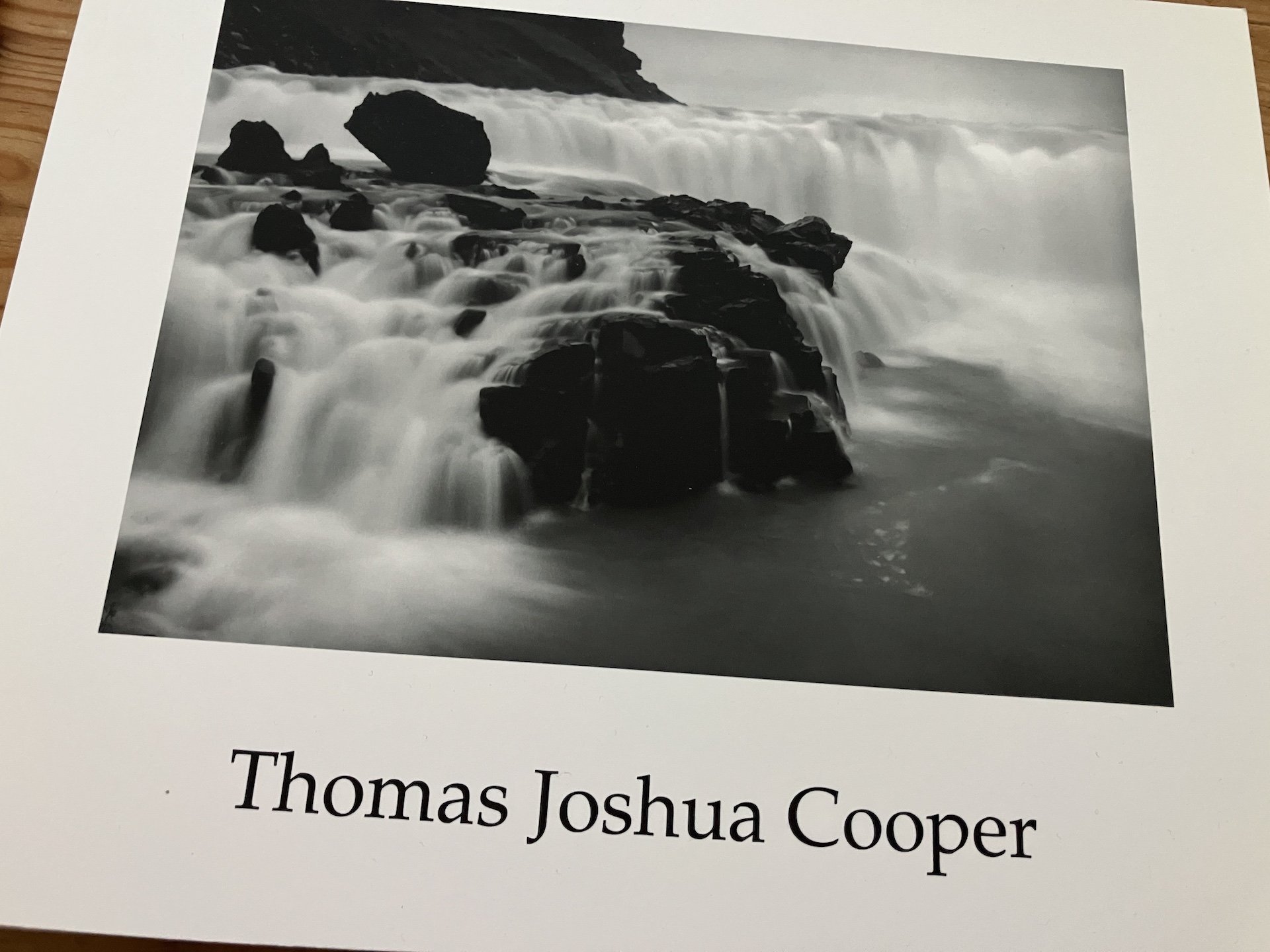
Two weeks ago, I came across the work of American-born contemporary landscape photographer Thomas Joshua Cooper. In 1982, he launched the Fine Art Photography program at the Glasgow School of Art. I purchased a catalogue of his 2022 exhibition, “In The Near Field,” held at the Annely Juda Fine Art gallery in London. The works in this exhibition feature land and water as the main subjects.
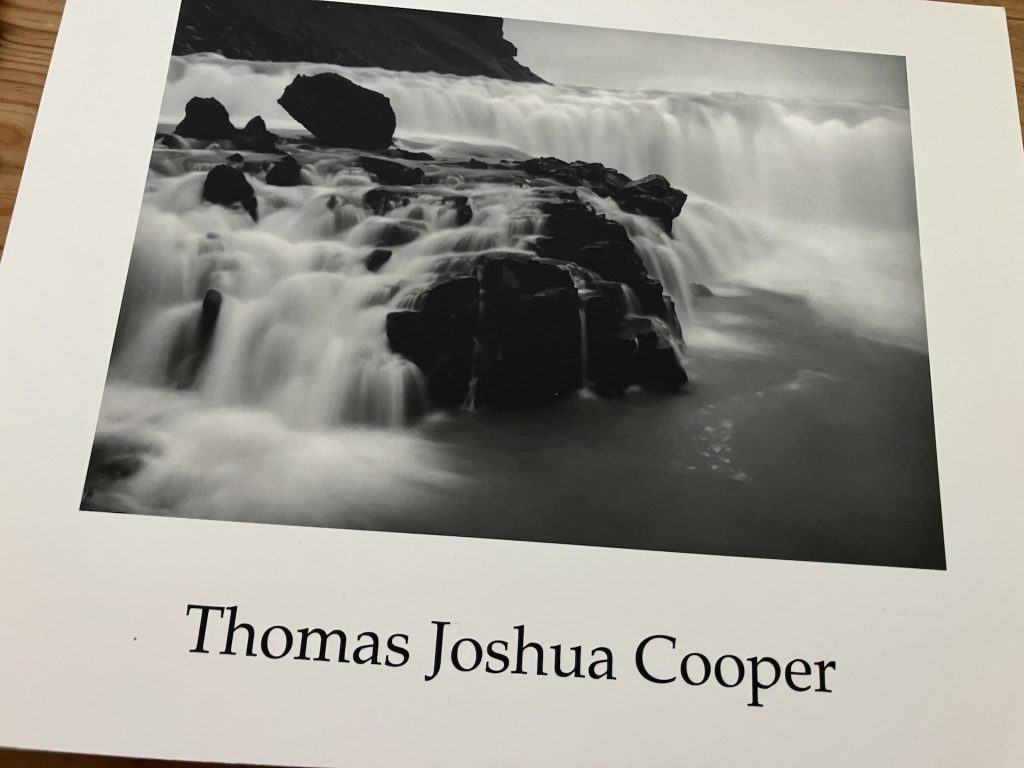
One of the series in the book is entitled Following the English Greenwich Meridian – 0° Longitude. In eight photos, Cooper travels from Peacehaven to Greenwich and East Riding, although the first photo in the series is made at the Isle of El Heirro, one of the Canary Islands, way off the Meridian.
This raises an important consideration regarding the perception that “everything has already been photographed.” It leads me to reflect on whether it’s worthwhile to pursue this project despite that mindset. The thought that individuals familiar with Cooper’s work might categorise my concept as a mere imitation doesn’t concern me.
I believe it reinforces my resolve to carve out a distinctly original space for this project within my broader body of photography. It inspires me to delve deeper into my personal vision and artistic approach, pushing me to create images that not only resonate with my unique perspective but also contribute something fresh and meaningful to the conversation surrounding contemporary photography.