

In 2024, the Woodland Trust acquired 119 hectares of land in Norfolk to establish a new native woodland at Green Farm, located between the two parts of the village of Thompson. Before this acquisition, the Woodland Trust managed 145 hectares across 12 sites in Norfolk, most of which were smaller than 12 hectares. With this new addition, they will nearly double the tree cover in the county.
This site focuses on more than just trees. Along with planting 142,000 native trees, the Woodland Trust will develop a diverse landscape that includes native broadleaf woodlands, natural grasslands, and wood pastures. Additionally, over 2 kilometres of newly planted hedges will connect isolated veteran trees.
Green Farm, rebranded Thompson Wood, will be a new publicly accessible haven for Norfolk with a network of paths. It aims to promote nature recovery and climate resilience while providing recreational space.
The Woodland Trust is collaborating with the Norfolk Wildlife Trust, which already manages the nearby Thompson Water, Carr, and Common Sites of Special Scientific Interest (SSSIs). These areas are famous for their pingo ponds, which are post-glacial depressions formed at the end of the Ice Age. These ponds serve as habitats for many endangered species, including the emerald damselfly and the great crested newt.
Woodland Trust webpage Thompson Wood
With the management plan in hand, we identified 30 fixed point photography locations that cover the site’s four major aspects: woodland, hedges, grassland and wetland.
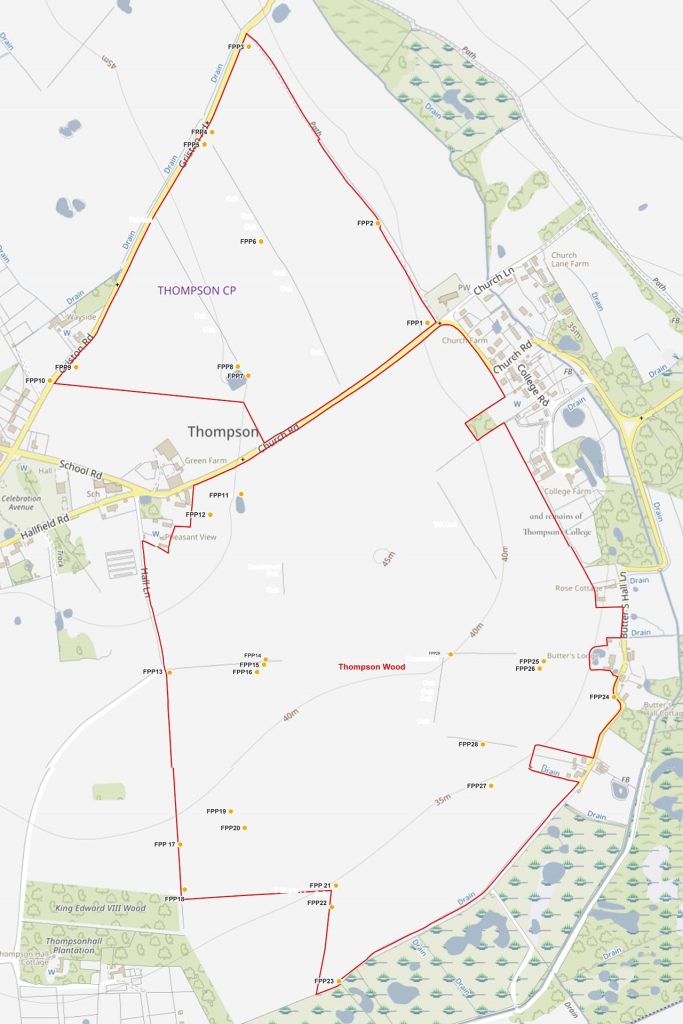
Selection of FPPs
FPP06b – New grove – planted
FPP06bisa – New grove – planted
FPP11a – Existing pond
FPP13a – New hedgerows and grove – planted
FPP20 – New grove
FPP26b – New grassland and open wooded habitat
FPP27 – Wetland – Recreate pingos